You would think the phrase "I treat people all the same" would be a good mark of true equality, but when I hear someone say it, I shudder. You're not supposed to treat people the same. In fact, doing so is a key reason why junior personnel are losing respect for the chain of command.
Let's start with giving mentoring time. Personnel that have lots of problems tend to consume our time. You have to write counseling chits, which get stored in a binder. Then when you realize a Sailor isn't going to last, you have to bring in legal, which involves more paperwork. Then, since Sailors have rights, you have to give them time to talk to the defense legal people, even when it is painfully obvious that the Sailor is in the wrong. When it's all said and done, you've dumped a lot of time on a crappy Sailor, only to have them swear at you in a final form of disrespect on their way out the door.
Yup, been there, done that. And good leaders will continue to do this.
Showing posts with label leadership. Show all posts
Showing posts with label leadership. Show all posts
Friday, July 7, 2017
Wednesday, July 5, 2017
Getting respect: Sometimes you just need to do

The last few months, I keep hearing about "respect," typically as in "someone is not respecting me as a (chief/division officer/naval officer/petty officer/whatever)." I am told that Millenials don't respect their chain of command, and that if we could only harken back to the old days, we would be far better for it.
To that I say, bullshit.

Wednesday, January 11, 2017
Working on a book!

My posting has been sporadic due to Christmas break (and I took more days than normal, gotta use up that leave balance!) but also because I'm working on a book, ideally part of a series on leadership. I'm on the ethics section, and wanted to share a small part of what I've written so far:
Our moral compass is built slowly over time. You accumulate experiences, training and
guidance that tells you what is right and wrong. Drastic changes are rare and easy to spot.
Your moral compass is
more likely to suffer death by a thousand cuts than a sudden brittle
fracture. Worse, you are heavily
influenced by those around you. If your
command climate permits questionable ethics, you'll be more likely to make poor
ethical decisions.
Germany was a perfect
example of this. I recommend reading
Erik Larson's book "In The Garden of Beasts." The book shows the perspective of Germany
from the American ambassador, who watched it slowly decay over the reign of
Hitler as Chancellor. His daughter and
wife noticed that although the German's were nice people, slowly over time they
became increasingly harsh towards the Jews.
One quote is particularly telling:
“Coordination' occurred with astonishing speed, even in sectors of life
not directly targeted by specific laws, as Germans willingly placed themselves
under the sway of Nazi rule, a phenomenon that became known as
Selbtsgleichschaltung, or 'self-coordination.' Change came to Germany so
quickly and across such a wide front that German citizens who left the country
for business or travel returned to find everything around them altered, as if
they were characters in a horror movie who come back to find that people who
once were their friends, clients, patients, and customers have become different
in ways hard to discern.”
Remember that these people started
off just like you and me. Hitler's
desire to exterminate the Jews eventually crept into most of his soldiers, no
matter what their upbringing. Or, in
more blunt terms, you can't be a diamond in the mud, because at some point you
become just another mud covered diamond.
This isn't a defense
of Germany's actions. We can guard
ourselves from ethical problems. It
starts with properly identifying the problem.
You won't face ethical dilemmas on some big scale, instead, it will be a
small ethical decisions on a day to day basis that you need to be constantly
getting right in order to maintain your moral compass.
Sunday, November 1, 2015
Leadership lessons from Riley the dog
 |
| So the blue one is my hunting share? |
"Mom, I'm kinda busy, can I call you back in ten minutes?"
She sounded choked up a bit, so I hung on, until she said "Riley didn't make it."
My dog has been living at my parent's house since I moved to Hawaii. I went on leave these past two weeks to attend a wedding and visit my family back home. The last three days I was there, he wasn't feeling well. German Shorthair Pointers (or GSPs, for short) are supposed to be full of energy, even ones that are 7 years old. I left on 30 October...Riley didn't last but another day.
Despite having been separated for well over a year, it still hit me hard. I had started making plans to have him move back in with us as soon as we moved to Connecticut. I always felt guilty that my parents had taken him, since they have cats that live inside who were thus relegated to the basement. But I really felt guilty because Riley had been a good friend, or at least as much of one that a dog can be to a human. Leaving him with someone else just felt...wrong.
Riley also taught me a lot about leadership. The more I sat back and thought about it, the more I realized that many of the every day things I take for granted I learned as a dog owner. Thus it is only fitting that after his death, I ensure that Riley's leadership lessons live on.
Thursday, October 29, 2015
Killing innovation with mediocrity
 |
| How I feel almost every day now... |
Recently I spoke with a fellow junior officer about changing the setup we have for distributing some of our reports. Currently we email them out, and although we serialize them, we don't have a way of saving them where others can search for them. One of our subordinate fleets saves their reports to a blog, which I thought was a great idea. I played around a bit with the WordPress blog that Intelink uses and setup a sample blog.
Unfortunately, we can't just register people for blog updates. We would have to have them subscribe on their own, since the WordPress widget for subscribing someone isn't on Intelink. Apparently that's a big deal, because it has literally held us up for over a month now.
Seriously. Because we might have people too lazy to click a "subscribe to RSS" link, we will continue to use email to distribute our reports.
Thursday, September 10, 2015
Bouncing back
 |
| Gavel, by Wikipedia |
http://www.public.navy.mil/bupers-npc/reference/milpersman/1000/1400Promotions/Documents/1430-020.pdf
2. Reinstatement to Pay Grades E-2 and E-3. As outlined in reference (a), COs have the authority to reinstate members to E-2 or E-3 (one paygrade only) any time after reduction in rate, without referral to higher authority.
Other reductions can be appealed and restored, but it must be at least 12 months after the offense.
Saturday, July 11, 2015
Why we need technical leaders
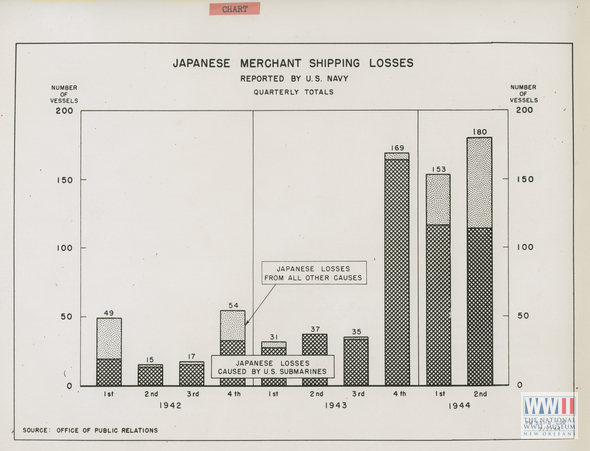 |
| Electromagnetic Maneuver warfare not important? Ask the Japanese, whose broken code was used to cue submarines. From National WW2 Museum. |
1. Tell your people to get er done?
2. Tell your people to bring you "solutions, not problems."?
3. Quote "Message to Garcia?"
2. Tell your people to bring you "solutions, not problems."?
3. Quote "Message to Garcia?"
If you're Charles 'Swede' Momsen, you do none of these. You take a bunch of torpedos, shoot them into
a Hawaiian island, find one that doesn't work, dive in yourself to save it, and
figure out that the firing pin wasn't igniting properly.
Thursday, June 4, 2015
The Purpose of Officers
 |
| Officer cover, from the Marlow White catalog |
It's in short, completely absurd. I read it hoping for more, but it's actually sad enough that it merits an in-depth response.
Monday, May 11, 2015
Beer brewing leadership lessons
 |
| Not all fizzy yellow beer sucks. Kona Longboard, for example, is a great lager to enjoy on hot summer days in Hawaii. |
 |
| According to the Castlemaine XXXX museum, beer brewing is what brought early people together and created civilization. I'd drink to that. |
Ironically, at the same time this was happening I was a division officer on a submarine. I had a division of 10 Sailors with a Chief. I had to learn to manage maintenance, division collaterals, underway preps and EVALs. I made lots of mistakes as a junior officer. Luckily, my Chief and Department Head bailed me out so that the division didn't suffer. In the end, I learned a lot and became a better leader for it.
 |
| A brown ale designed for the working man and associated with industry, just like my first division. Image courtesy of Wikipedia. |
Good leadership tools are basic and work on both small and large scales. When I took over a 170 Sailor Training Department, I found out leave chits for my Sailors were taking weeks to get approved. I did the same thing a former boss did to solve problems: walked around to confirm the problem, integrated a solution into the battle rhythm and enforce the rules. I printed the leave approval tracker from NSIPS every week, and after counseling one person that had let four chits sit for 72 hours with no action, the leave chit issue went away. That increased morale and helped refocus Sailors on the mission and away from worrying about whether they would get a chance to take time off.
 |
| I'd work for this guy, wouldn't you? |
In much the same way, the organization you lead will operate with or without you. Your goal as a leader is to insert yourself at the right moment to make things better. Your time is valuable. Pick the right time and the right place and you get a better product. Choosing to not be present is just like putting it all the ingredients into one carboy and praying for a miracle. People need your leadership and they need you to be present, not just a figurehead in a nice office.
 |
| Much incredible beer has come from these simple vessels... |
And yet, once you've had good beer, you don't typically go back. In the same sense, once a junior officer has had a good leader and seen how leadership is supposed to work, he or she can't accept poor leadership. I introduced many of my friends to ales, IPAs, stouts and porters. They cannot drink cheap light beer now without feeling like something is missing. The same is true for leaders. Once we've worked for an awesome boss, we find it hard to accept poor or mediocre performance.
I also find that most people don't appreciate the amount of work that goes into one bottle of beer. It takes a lot of time, talent and expertise to make one bottle of beer. Most people, after consuming one bottle, don't sit back and say "I just used up five hours of labor and it tasted great!" Similarly, the GMT briefer that didn't bother preparing and wasted everyone's time with crappy training probably didn't think about the man hours wasted.
In the end, there are multiple types of beers, each of which has a time and a place to be consumed. No one beer fits all occasions, just like no one leadership style works for all situations. It takes patience and skill to make a good bottle of beer, but it is worth it in the end, in the same way you enjoy looking back at the great division, department or command you helped build.
Even if you never brew, please take the time to appreciate the beer you drink, the leaders you work for and the people that work for you.
The views expressed in this blog post are those of the author and do not reflect the official policy or position of the Department of the Navy, Department of Defense or the U.S. Government. The author reminds you to drink responsibly with other great leaders and a designated driver.
Monday, May 4, 2015
How Darth Vader's Leadership Can Solve The Navy's Bureaucracy Problems
Let's face it, The Empire Strikes Back is an awesome movie. It might be the best movie of all times. The underdog hero of the original Star Wars: A New Hope starts off getting decisively routed at Hoth (someone must have forgotten that 'Hope' isn't a strategy!). Han gets captured and frozen in carbonite, Leia barely escapes and Luke joins the Wounded Warriors. The Empire shows us how COIN operations are supposed to be executed.
In this movie Darth Vader solves all the biggest bureaucratic problems that face our Navy today. In fact, we should all strive to be more like this Dark Lord of the Sith. After reviewing constant Galactic Internet content about why his Imperial Officers were leaving service early to go be nerf herders or moisture farmers, Darth Vader made it fun to be in the Imperial Navy again. Despite his unnatural inclinations towards the Dark Side of the Force, Darth Vader leaves us with valuable lessons on how to properly solve problems facing today's Navy.
He doesn't tolerate mediocrity. Admiral Ozzel nearly ignored his own ISR-gathering probe droids. Vader and Piet luckily catch this and are able to locate the Rebel center of gravity on Hoth and launch a full on attack. Vader shows understanding and lets Ozzel live while probably making a note to give him a 3.0 FITREP in the upcoming O-7 FITREP cycle.
Then Ozzel blows off yet another order from Vader and nearly throws the entire attack. Vader puts an end to Ozzel with his own version of a 1.0 SP FITREP by choking him to death via VTC. Too severe? How many Imperial Stormtroopers died in the bellies of the AT-ATs that could have been saved if the Rebels were caught without their shields up? We find Vader's actions ruthless, yet we all complain that there are too many Sailors that are on the ROAD program riding out 3.0 EVALs and FITREPs every year until retirement. Unless you're a CO, short of a DUI, sexual assault or running a ship aground, it seems impossible to get fired in today's Navy.
Not only does Vader not tolerate mediocrity, he actively promotes initiative and sets high expectations. Want a spot promotion? Vader's your man. Captain Piett jumps four paygrades to O-7. It obviously doesn't set the Empire back one bit. If anything, now-Admiral Piett has more drive to crush the Rebel scum and pushes his forces accordingly. Admiral Zumwalt downgraded multiple billets in order to capture that fervent spirit, with great success.
Not only can Darth Vader reinvigorate his battle staff, but he is an active member of all important operational planning teams (OPTs). Luckily for the Empire, Darth Vader had insisted on a backup plan to the bombardment of Hoth. His OPT correctly identified the base shield as the Rebel's center of gravity. Although the ground assault didn't catch Rebel leadership, it did deny the Rebellion an operating base.
After figuring out that his conventional forces couldn't catch Rebel leadership, he charged his OPT to redo Annex C4 (Special Operations) of the Galactic Empire's OPLAN 662. The OPT came up with three well-made COAs, and Darth Vader chose the "Hire Bounty Hunters" COA. He executed it immediately from the deck of his flagship.
Sure, some Imperial Officers had doubts. "We don't need their scum" they said. But Vader knew his people. He knew that the Imperial Navy could easily crush the Rebellion in an open fight. But the Rebels hid in the shadows and lived to fight again. The Rebels knew they could outlive Darth Vader and the Emperor to eventually fight on their own terms. So Darth Vader used an unconventional solution to an unconventional problem. It worked brilliantly: not only was Han Solo captured, but Luke was lured in too and nearly destroyed. Had the OPT recommended more than just a single complement of TIE Fighters be hidden at Bespin, the Millenium Falcon might never have escaped.
Darth Vader's leadership raised the hopes and morale of the Imperial Navy after the disastrous loss of the Death Star. Retention went through the roof. Everyone wants to hunt Rebel scum when your leadership rewards initiative. Although the Empire was eventually defeated, it lost due to a lack of strong leadership in Galactic-weaponry acquisition and critical infrastructure protection, not due to any fault of the Imperial Navy. Had the Emperor simply let the Navy attack the Rebel Fleet at Endor (as the original Annex C3 called for), perhaps peace and security could have finally been restored to the galaxy. At least in the end, Darth Vader's leadership lessons were preserved into a series of movies to educate young Naval Officers in how to better their Navy's future.
The views expressed in this blog post are those of the author and do not reflect the official policy or position of the Department of the Navy, Department of Defense, U.S. Government, Galactic Empire or the Emperor. All pictures courtesy of Disney.
In this movie Darth Vader solves all the biggest bureaucratic problems that face our Navy today. In fact, we should all strive to be more like this Dark Lord of the Sith. After reviewing constant Galactic Internet content about why his Imperial Officers were leaving service early to go be nerf herders or moisture farmers, Darth Vader made it fun to be in the Imperial Navy again. Despite his unnatural inclinations towards the Dark Side of the Force, Darth Vader leaves us with valuable lessons on how to properly solve problems facing today's Navy.
He doesn't tolerate mediocrity. Admiral Ozzel nearly ignored his own ISR-gathering probe droids. Vader and Piet luckily catch this and are able to locate the Rebel center of gravity on Hoth and launch a full on attack. Vader shows understanding and lets Ozzel live while probably making a note to give him a 3.0 FITREP in the upcoming O-7 FITREP cycle.
 |
| Admiral Ozzel was probably an aviator whose flying job was replaced by droids. His lack of faith in ISR is disturbing... |
 |
| This is why Darth Vader insisted on a VTC connection with all his vessels. N6 needs to stop whining. |
 |
| Asteroid field? Simply target practice to raise the Galactic Gunnery pillar in DRRS-N. Unlike the US Navy, the Imperial Navy doesn't need a memo to conduct gunnery at all opportunities. |
 |
| Phase 3 (Dominate the Enemy) was complete when this guy entered the fray. |
 |
| The OPT didn't decide Bounty Hunter makeup...that was a personal touch of the commander |
 |
| Join me Luke on my personal staff! I'll talk to the detailer personally! |
The views expressed in this blog post are those of the author and do not reflect the official policy or position of the Department of the Navy, Department of Defense, U.S. Government, Galactic Empire or the Emperor. All pictures courtesy of Disney.
Wednesday, April 8, 2015
The only privilege

This weekend I stood watch with a team of four enlisted Sailors and three additional under instruction Sailors. We managed to get a lot of work and training done, making significant qualification progress during an otherwise fairly dead time on the watchfloor. Between the discussions on proper turnovers, relative military power and the occasional reference to the basketball game, no one ever bothered to discuss the fact that we all came from different backgrounds and had different skin colors.
Because the truth of the matter is, none of us cared.
Saturday, February 21, 2015
Lying

The Strategic Studies Institute recently published a 33-page paper about lying. It's worth the read (http://www.strategicstudiesinstitute.army.mil/pubs/display.cfm?pubID=1250). While there is a bit of click-bait going on (Saying "Army Officers Lie" is certainly designed to get attention), the paper itself is well written and seems to be well researched.
As you read through it, replace "Army" with "Navy," and you'll find it still rings true. For example, the study found that a unit needs 297 days to complete all mandated training, but only had 256 days to do so...meaning there is no physical way to complete all training.
"If units and individuals are literally unable to complete the tasks placed upon them, then reports submitted upward by leaders must be either admitting noncompliance, or they must be intentionally inaccurate. Units, however, rarely have the option to report that they have not completed the ARFORGEN pre-deployment checklist. Likewise, it is not an option for individuals to decide that they will forego sexual assault prevention training this quarter because they are too busy with other tasks. If reporting noncompliance is not an acceptable alternative because of the Army’s tendency toward zero defects, then it is important to examine the resultant institutional implications."
Does this sound like ORSE/INSURV? Is our SAPR training any different?
Friday, January 30, 2015
Female submariners
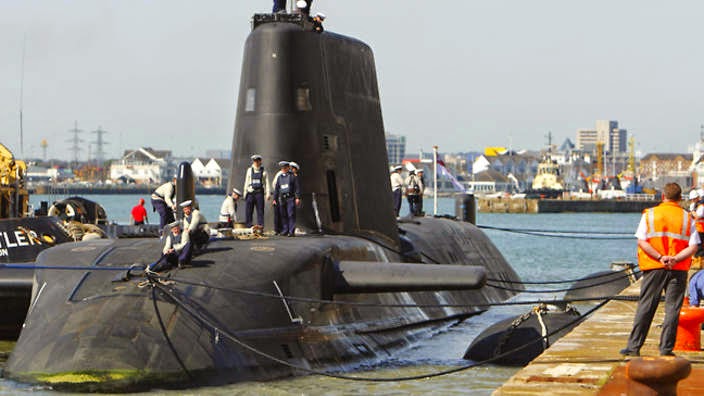 | ||
| Astute-class submarine |
http://www.public.navy.mil/bupers-npc/reference/messages/Documents/NAVADMINS/NAV2015/NAV15019.txt
http://www.public.navy.mil/bupers-npc/reference/messages/Documents/NAVADMINS/NAV2015/NAV15020.txt
http://www.public.navy.mil/bupers-npc/reference/messages/Documents/NAVADMINS/NAV2015/NAV15021.txt
No huge surprises, this is expected. We already have female submarine officers, and it was inevitable that it would trickle down to enlisted. Most of our allies have female submarine officers (hence the UK submarine pictured above).
As a guy who used to drive submarines, I haven't weighed in much on the submarine discussion. I support the move, mainly because I take a very libertarian view towards jobs: if you can do the job, then it should be open to you. I'd be fine with female Navy SEALs so long as they met the same requirements.
I do predict some upcoming issues though:
Friday, January 23, 2015
How to improve team intelligence

Slashdot posted an intriguing article about teamwork and why some teams outperform others:
http://science.slashdot.org/story/15/01/19/0249200/why-some-teams-are-smarter-than-others
The original study is here:
http://www.chabris.com/Woolley2010a.pdf
The basic findings is that intelligence of any individual member doesn't make a team better nearly as much as three other factors:
1. The average social sensitivity of group members, i.e. how well group members could read the feelings of other members.
2. How often each member spoke. Groups where one or two members dominated were not as good as others where speaking turns were evenly distributed.
3. The proportion of females in the group.
This science, assuming it's valid, proves a lot of things that the Navy gets right, and should guide us on what we need to change to improve in the future.
Thursday, January 8, 2015
A response to "US Navy Chief Petty Officer Initiation Ill Advised"
With all the hoopla about CPO 365, I was a bit surprised to have this article about CPO 365 being canceled forwarded to me:
http://www.washingtontimes.com/news/2014/dec/31/us-navy-chief-petty-officer-initiation-ill-advised/?page=all#pagebreak
It's an opinion piece by retired Master Chief Bill Randall. Bill, if you're reading this, thank you for your service. I did enjoy the parts of your article explaining some of the time-honored traditions of CPO Initiation (now called CPO 365). I can attest that at least some of that is still happening from what little bit of the training I've seen. But I think you're article misses the point in a lot of places.
Tuesday, December 9, 2014
When do you fire someone?
At a job in Bahrain, my office had a civilian computer administrator (let's call her "Jane") who was just awful. Not only was Jane bad at her job, but she also treated the enlisted Sailors like dirt and regularly slacked off on the job. I had always been told that you could never fire civilian employees, and apparently Jane's last few supervisors believed that. But in 2008 a new boss came in and, within 6 months, Jane was gone.
Despite popular belief, you don't have to live with poor performers in the government. So how do you get rid of them? After the computer administrator was fired, I asked my boss how and why he did it. He told me that while he didn't enjoy firing anyone, he had considered a few points first:
Despite popular belief, you don't have to live with poor performers in the government. So how do you get rid of them? After the computer administrator was fired, I asked my boss how and why he did it. He told me that while he didn't enjoy firing anyone, he had considered a few points first:
Friday, November 28, 2014
Fraternization guidance for Junior Officers

Fraternization is one of those nasty grey areas in the Navy, especially for officers. For junior enlisted, it's easy: hang out with E1-E6, avoid anything that is khaki, especially if it has bars or leafs on the collar. Since there are plenty of enlisted running around a command, there are plenty of people to hang out with, become friends with, and in general enjoy your time in the Navy.
Junior officers don't have this luxury. They are told to not hang out with junior enlisted because it violates the Navy's fraternization policy. They can't hang out with their Chief too much (and most Chiefs won't let them anyway). Senior officers are giving them tasking, so in most cases they avoid them. That leaves fellow JOs, of which there aren't many. So if you don't get along with a selection of 2% of the crew, well, it can be very lonely.
The problem here is that there is a lot of bad gouge about fraternization. So, let's start with an instruction. The Navy's fraternization policy is in OPNAVINST 5370.2C, which hasn't been updated since 2007, which speaks to its enduring nature. At only 5 pages long, it's a quick read, and worth the 20 minutes it'll take to read it (you can spare 20 minutes from Facebook, trust me). What does it say? In a nutshell:
- Officers and enlisted will not have unduly familiar relationships.
- Chiefs (E7-E9) will not have unduly familiar relationships with E1-E6.
- Obvious examples include cohabitating, sexual relationships, and indebtedness.
What constitutes an unduly familiar relationship? The 5370.2C doesn't try to list all circumstances, but it gives some guidance. An unduly relationship is anything that:
(1) call into question a senior's objectivity;
(2) result in actual or apparent preferential treatment;
(3) undermine the authority of a senior; or
(4) compromise the chain of command.
(2) result in actual or apparent preferential treatment;
(3) undermine the authority of a senior; or
(4) compromise the chain of command.
I think these points should be burned into every Junior Officer's lexicon, because if what you are doing doesn't meet these points, you are probably OK.
So, let's do some examples.
Friday, November 21, 2014
How to shake hands
We live in the electronic age, and one of the side effects is that our relationships with other humans has been fundamentally altered. We now link up regularly with people around the world via email, Facebook, Twitter, Video Teleconferencing and (still) the telephone. While this offers a lot of positives, one of the detriments is the lack of actual human contact. You could theoretically go through the day without having any real meaningful human contact.
Monday, October 20, 2014
Admitting there is a problem
First, I've got a new blog for the blog roll: The Greenie Board.
I got sucked in by his article called Perception? It's Reality. Apparently CNP is visiting Rhode Island to discuss the findings from the Navy Retention Survey, and input is being collated for him to comment on. One of the first comments sent in nails the problem on the head:
“The first step is to admit there is a problem - it's not a perceived lack of trust - it's an actual lack of trust. It's not a marketing problem - it's an operations problem. To say it's a perception problem makes the problem about the subordinates, rather than the Flag Officers / "senior leaders" who need to be looking introspectively at both their decision-making process and decisions and how both may contribute to the actual lack of trust.”
Friday, October 17, 2014
Fixing the little things

Toilet, from Wikipedia
I once had a toilet that didn't work well. It did its job OK, but often I had to jiggle the handle or fiddle with the tank to get it to stop running. At the time it was a minor annoyance, which I let slide for about a year.
Then one day I used the toilet right before walking out of the house to go to church. My family came back from church almost two hours later to find our toilet hadn't stopped running and had overflowed (from the tank, since the limit switch broke) and was cascading water down through the upstairs floor into our kitchen. Luckily I had homeowners insurance, which covered the toilet, new tile, new subfloor and the cleanup.
What I realized later in life was that the toilet was a little problem that I had chosen to life with. I could have spent part of an afternoon fixing the problem, but instead I just put up with it. And in the short term, it was fine. But over time, all the other components inside the toilet broke, and since I had already written off the toilet as broken in my mind, I didn't notice the slide until it caused a thousand dollars in damage to my house.
Subscribe to:
Posts (Atom)